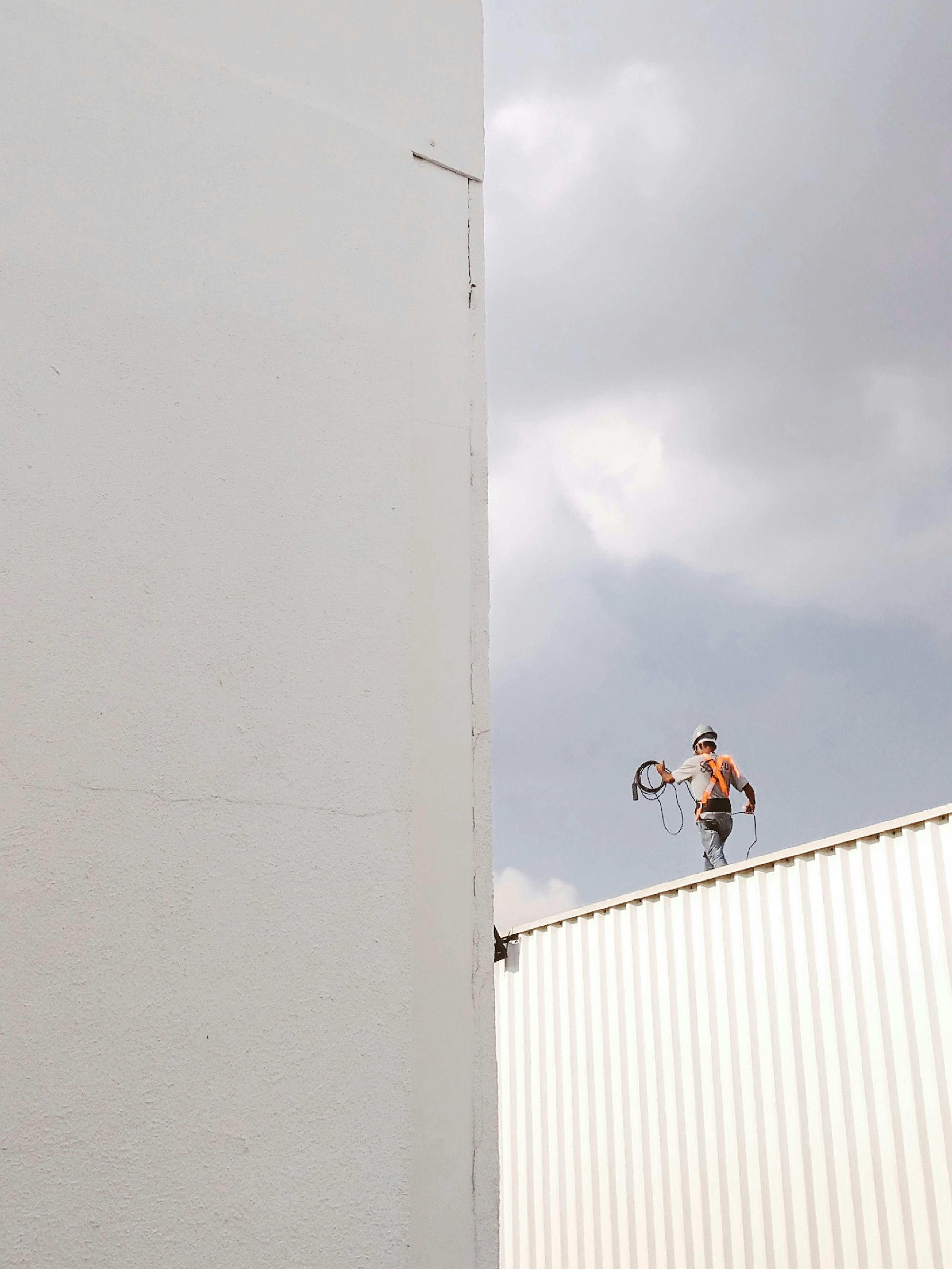
Roofing is the most weather-dependent trade in home services. You can't install shingles in the rain. You can't work safely in high winds. Asphalt shingles won't seal properly in temperatures below 40°F. A sudden afternoon thunderstorm can shut down an entire crew with a half-finished roof exposed to the elements.
The result? Roofing companies that schedule without weather intelligence experience cancellation rates of 35–45% during spring and fall storm seasons. That's nearly half of all scheduled jobs disrupted, creating a cascade of rescheduling, customer frustration, and lost revenue.
Companies using weather-aware scheduling systems cut that cancellation rate by 60%—dropping from 40% to under 16%. Here's how they do it, and what it means for every aspect of running a roofing operation.
Why Weather Matters More for Roofing
Every outdoor trade deals with weather. But roofing has a uniquely severe relationship with weather conditions because of the work itself:
- Rain — Even light rain makes roof surfaces slippery and dangerous. Moisture trapped under shingles leads to premature failure. A roof that's torn off and exposed to rain can cause thousands of dollars in interior water damage.
- Wind — Sustained winds above 15–20 mph make shingle installation difficult. Gusts above 30 mph are a safety hazard for crews working on elevated, exposed surfaces. Materials can blow off the roof during installation.
- Temperature — Asphalt shingles need heat to activate the adhesive strips that bond them together. Below 40°F, shingles don't seal properly and are prone to cracking during installation. Extremely hot temperatures (above 95°F) make shingles too soft and sticky to work with, and crew safety becomes a concern.
- Humidity and dew — Morning dew on a roof surface requires waiting for it to dry before work can begin. In humid climates, this can delay start times by 1–2 hours every morning.
These aren't minor inconveniences. They're hard constraints that determine whether work can happen at all. A roofing company that ignores them ends up with crews sitting in trucks, customers waiting at home, and jobs pushed further and further behind schedule.
The 60% Cancellation Reduction: How It Works
Weather-smart scheduling isn't just checking the forecast the morning of a job. It's a systematic approach that integrates weather data into every scheduling decision.
Multi-Day Forecast Integration
The most effective systems use 7–10 day forecasts to proactively manage the schedule:
- Booking window filtering — When a customer books a roofing job, the system only offers dates with favorable weather forecasts. Days with rain probability above 30% or wind forecasts above 20 mph are removed from available slots.
- Rolling reassessment — As the job date approaches, the forecast is rechecked at 72 hours, 48 hours, and 24 hours. If conditions deteriorate, the customer is proactively notified and offered alternatives before the crew is dispatched.
- Morning go/no-go — A final weather check at 5 AM on the job day, looking at hourly conditions. If the morning is clear but afternoon storms are forecast, the system can recommend an early start with a specific completion target.
The 60% reduction comes from preventing bad bookings in the first place (about 40% of the improvement) and proactively rescheduling before the day of (the remaining 20%). By the time the morning arrives, the vast majority of jobs on the schedule are going to happen.
Weather Risk Scoring
Not all weather is binary go/no-go. A day with 20% rain chance in the morning and clearing skies in the afternoon is workable if you adjust the start time. A day with sustained 18 mph winds might be fine for a low-slope commercial roof but dangerous for a steep residential pitch.
Advanced systems assign a weather risk score to each scheduled job based on:
- Forecast conditions (precipitation, wind, temperature)
- Roof characteristics (pitch, height, exposure)
- Job type (tear-off vs. repair vs. inspection)
- Time sensitivity (storm damage that can't wait vs. planned replacement)
Jobs with high risk scores get flagged for review. Jobs with moderate scores get adjusted (shifted to the afternoon when winds typically calm, or started early before heat builds). Jobs with low risk scores proceed as planned.
The roofing companies that win aren't the ones that work in any weather. They're the ones that never show up to a job they can't finish.
Storm Damage Surge Management
After a major hailstorm, windstorm, or tornado event, roofing companies experience demand surges that can exceed normal capacity by 500–1,000%. Every homeowner in the affected area needs an inspection, and a significant percentage will need repairs or full replacement.
Storm surge scheduling requires a fundamentally different approach than normal operations:
Triage Phase (Days 1–7)
- Mass inspection scheduling — Open all available calendar slots for 15–20 minute inspections. A crew that normally installs one roof per day can inspect 15–20 properties.
- Geographic batching — Storm damage is geographically concentrated. Batch inspections by neighborhood to minimize drive time.
- Emergency tarp scheduling — Prioritize tarping for homes with active leaks. These are time-critical and should jump the queue.
Assessment Phase (Weeks 2–4)
- Insurance claim coordination — Schedule adjuster meetings at the property. This requires coordinating the homeowner's availability, the adjuster's availability, and your representative's availability—a three-party scheduling problem.
- Priority queuing — Homes with active leaks or structural damage get priority for repair scheduling. Cosmetic damage goes into a longer queue.
Repair Phase (Months 1–6)
- Extended scheduling horizon — Material availability and crew capacity require booking repairs weeks or months out. Customer communication about timeline expectations is critical.
- Material coordination — Storm surges create material shortages. Scheduling must account for material delivery dates, not just crew availability.
- Temporary crew management — Many companies bring in additional crews for storm work. These temporary resources need to be integrated into the scheduling system with their own availability and skill profiles.
Inspector Coordination
Roofing projects require building permits and inspections in most jurisdictions. A typical re-roof requires at least two inspections: one after tear-off (to inspect the decking) and one after installation (to verify proper installation and code compliance).
Inspector scheduling for roofing has unique challenges:
- Same-day inspections — The tear-off inspection ideally happens the same day as the tear-off, before the new material goes on. This requires coordinating inspector availability with your work schedule in real time.
- Weather dependencies — If weather delays the tear-off, the inspection must move too. This creates a cascading rescheduling problem.
- Post-storm backlogs — After storm events, inspector capacity is overwhelmed. Wait times can extend from days to weeks, creating a bottleneck that delays the entire repair pipeline.
Material Delivery Timing
Roofing materials need to arrive at the job site within a specific window—close enough to the job date that they're not sitting on the homeowner's property for days (creating liability and homeowner frustration), but early enough that the crew isn't waiting for a delivery truck.
Integrated scheduling handles material delivery by:
- Auto-ordering materials when a job is confirmed and the weather forecast looks favorable
- Scheduling delivery for the day before or morning of the job, depending on supplier logistics and site access
- Adjusting delivery dates automatically when weather delays shift the job date
- Tracking material availability so jobs aren't scheduled for dates when the required shingle color or type is backordered
Crew Safety and Scheduling
Roofing is consistently one of the most dangerous occupations. Falls are the leading cause of death in construction, and roofers are at the highest risk. Weather is a direct contributor to fall risk—wet surfaces, high winds, and temperature extremes all increase danger.
Weather-smart scheduling is fundamentally a safety tool:
- Hard safety cutoffs — The system enforces non-negotiable rules. No work scheduled when wind gusts are forecast above 35 mph. No work on steep pitches when temperatures are below freezing. No work when lightning is within 10 miles.
- Heat stress management — In summer months, scheduling early start times (6 AM) with built-in rest breaks during peak heat hours (12–2 PM)
- Daylight scheduling — Ensuring jobs are scheduled with enough daylight to complete. A roof tear-off started at 3 PM in November creates a dangerous situation if it can't be completed before dark.
Insurance Claim Scheduling
A significant portion of roofing work is insurance-driven—either storm damage claims or age-related replacement claims. Insurance scheduling adds layers of complexity:
- Initial inspection — Your estimator visits the property to assess damage and prepare a scope of work
- Insurance filing — The claim is submitted with documentation
- Adjuster meeting — The insurance adjuster visits the property, often requiring the homeowner and your representative to be present
- Approval and scheduling — Once the claim is approved, the actual repair or replacement is scheduled
- Completion and documentation — Final photos, warranty paperwork, and certificate of completion for the insurance company
Each step has its own scheduling requirements and dependencies. The adjuster meeting can't happen until the claim is filed. The repair can't be scheduled until the claim is approved. The approval might come with conditions that change the scope, requiring re-estimation and re-scheduling.
A booking system that tracks each claim through these stages and automatically advances the scheduling process as each stage completes prevents jobs from stalling in the pipeline.
Putting It All Together
Roofing scheduling is a weather problem, a safety problem, a logistics problem, and a customer communication problem, all wrapped into one. The companies that handle it best don't try to fight the weather—they build systems that work with it.
Weather-smart scheduling means fewer cancelled appointments, less wasted drive time, safer work conditions, better material coordination, and customers who trust that when you say “Tuesday,” you mean Tuesday. The 60% reduction in cancellations isn't just a scheduling improvement. It's a reputation improvement, a safety improvement, and a profitability improvement, all driven by the simple act of integrating weather data into every booking decision.
Start by connecting your scheduling system to reliable weather APIs. Set thresholds for precipitation, wind, and temperature that match your safety standards and manufacturer installation requirements. Build proactive notification workflows that reach customers before they have to call you. And treat storm surge events as a distinct operating mode with its own scheduling rules.
The weather will always be unpredictable. Your scheduling doesn't have to be.