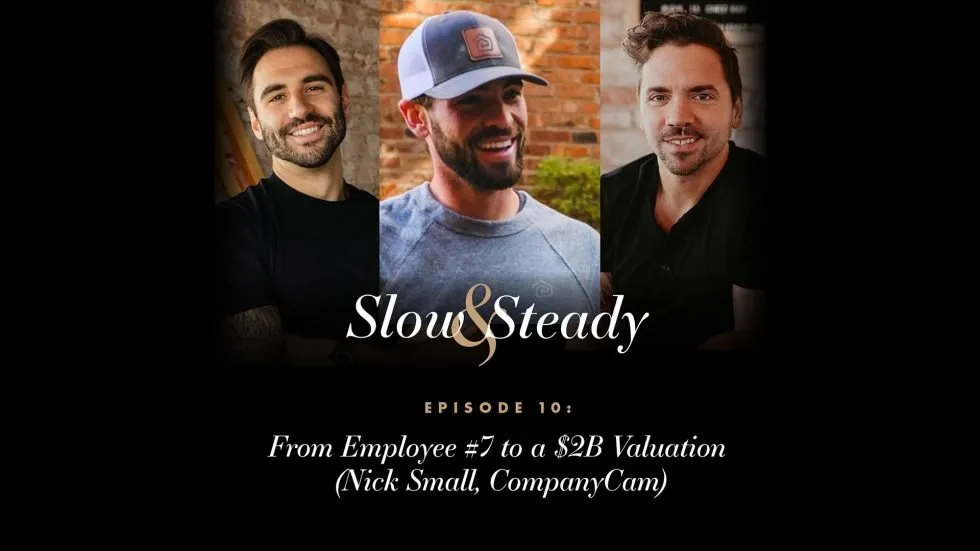
By Nick Small, former Head of Growth at CompanyCam
I spent years helping home service companies figure out their digital marketing at CompanyCam. I talked to hundreds of contractors who were spending real money on Meta ads, Google LSAs, and boosted posts — and most of them had the same complaint: “I'm getting clicks but not getting jobs.”
The frustrating part? They weren't wrong about the opportunity. Paid ads absolutely work for field service. But the gap between “someone clicked your ad” and “someone is on your schedule” is where most companies lose.
Here's what I've learned about closing that gap.
The Real Reason Your Ads Aren't Converting
Most home service ads lead with the company. “Licensed and insured since 1997.” “Family owned.” “5-star rated.” These are all trust signals, and they matter — but they're not what stops someone mid-scroll.
What stops someone mid-scroll is their problem.
A homeowner whose basement just flooded doesn't care that you've been in business for 25 years. They care that someone can be there today. A homeowner whose AC died in July doesn't want to read about your certifications. They want to know you can fix it fast.
Lead with the customer's problem, not your credentials. Your certifications and reviews belong on the landing page, not the ad creative. The ad's job is to make someone think “that's me” — not “that's a nice company.”
You're Not Competing With Other Service Companies
This is the part most contractors miss entirely. On Meta (Facebook and Instagram), you're not competing with other HVAC companies for attention. You're competing with everything else on the platform: baby photos, memes, news articles, Reels of someone's dog doing something ridiculous.
That means your ad needs to earn its space. The bar isn't “better than the other plumber's ad.” The bar is “interesting enough that someone stops scrolling past their friend's vacation photos.”
What works:
- Authentic beats polished. A quick phone video of your crew on a job site outperforms a stock-photo ad almost every time. People scroll past anything that looks like an ad. They stop for anything that looks real.
- Before-and-after content is gold. Nothing demonstrates your value faster than showing the problem and the result side by side. This is especially powerful for restoration, painting, landscaping, and remodeling.
- Testimonials on camera. A 30-second video of a happy customer at their front door is more persuasive than 50 five-star Google reviews.
- Show the process, not just the result. People are surprisingly fascinated by trade work. A time-lapse of a roof install or a behind-the-scenes look at ductwork replacement gets engagement that pure sales content never will.
How to Actually Increase Bookings
Getting attention is step one. Converting that attention into a booked appointment is where the real work happens.
Start with outcome, not tactic
Before you spend a dollar on ads, get clear on the math. How many leads do you need per month? What's your target cost per lead? What's your close rate on booked appointments? Work backward from revenue goals to ad spend, not the other way around.
Segment by service
Don't run one generic ad for your entire company. Run separate campaigns for each service line. An AC repair ad should go to an AC repair landing page with AC repair booking options. A water heater ad should go to a water heater page. The more specific the path from ad to booking, the higher your conversion rate.
Test fast, kill fast
Run 3–5 ad variations at a time. Give each one enough budget to generate statistically meaningful data (usually $50–$100 per variation). Kill the losers within a week. Double down on the winners. Most contractors run one ad until it dies. The best ones are constantly testing.
Watch the comments
Your ad's comment section is a goldmine of market research. People will tell you exactly what they want, what concerns them, and what objections they have. Use those insights to improve your next round of creative. And respond to every comment — engagement drives the algorithm, and a helpful reply can convert a skeptic into a customer.
The Long Game: Compounding Beats Campaigns
The companies that win at digital marketing aren't the ones that run the best single campaign. They're the ones that build a compounding content machine.
Every job you complete is content. Every happy customer is a testimonial. Every before-and-after is an ad asset. The businesses that systematically capture and publish this content build an organic presence that makes their paid ads cheaper and more effective over time.
This is where tools like CompanyCam pay for themselves many times over. If your crew is already documenting every job with photos and videos, you have a library of authentic content ready for ads. You're not scrambling to create content from scratch — you're curating what already exists.
The Meta Ad Library: Your Free Competitive Intelligence
Here's a tip that most contractors don't know about: the Meta Ad Library is a free, public tool that lets you see every active ad running on Facebook and Instagram. Search for your competitors by name and you can see exactly what creative they're running, how long it's been active, and what copy they're using.
If a competitor has been running the same ad for 6 months, it's probably working. Study it. Understand what makes it effective. Then create your own version that's better and more authentic to your brand.
This is not about copying — it's about understanding what resonates in your market. The Ad Library is the most underused free resource in home service marketing.
Getting More Leads Is Only Half the Equation
Everything above will help you generate more clicks, more form fills, and more phone calls. But here's the uncomfortable truth: if you can't book those leads fast, you'll lose them anyway.
The data is clear: 80% of homeowners hire the first company to respond. If your ad generates a lead at 8 PM and nobody calls back until 10 AM the next day, that lead is already talking to someone else.
This is where the scheduling piece becomes critical. Your ads drive interest. Your booking system converts that interest into revenue. If there's friction between “I want to hire someone” and “I have an appointment on the calendar,” you're leaking money.
Driive was built to close that gap. When a lead comes in from an ad, Driive qualifies them, finds the nearest available tech, accounts for drive time, and confirms the appointment — without anyone on your team picking up a phone.
Your ads bring them to the door. Your scheduling tool gets them on the calendar. Both have to work, or neither works well enough.