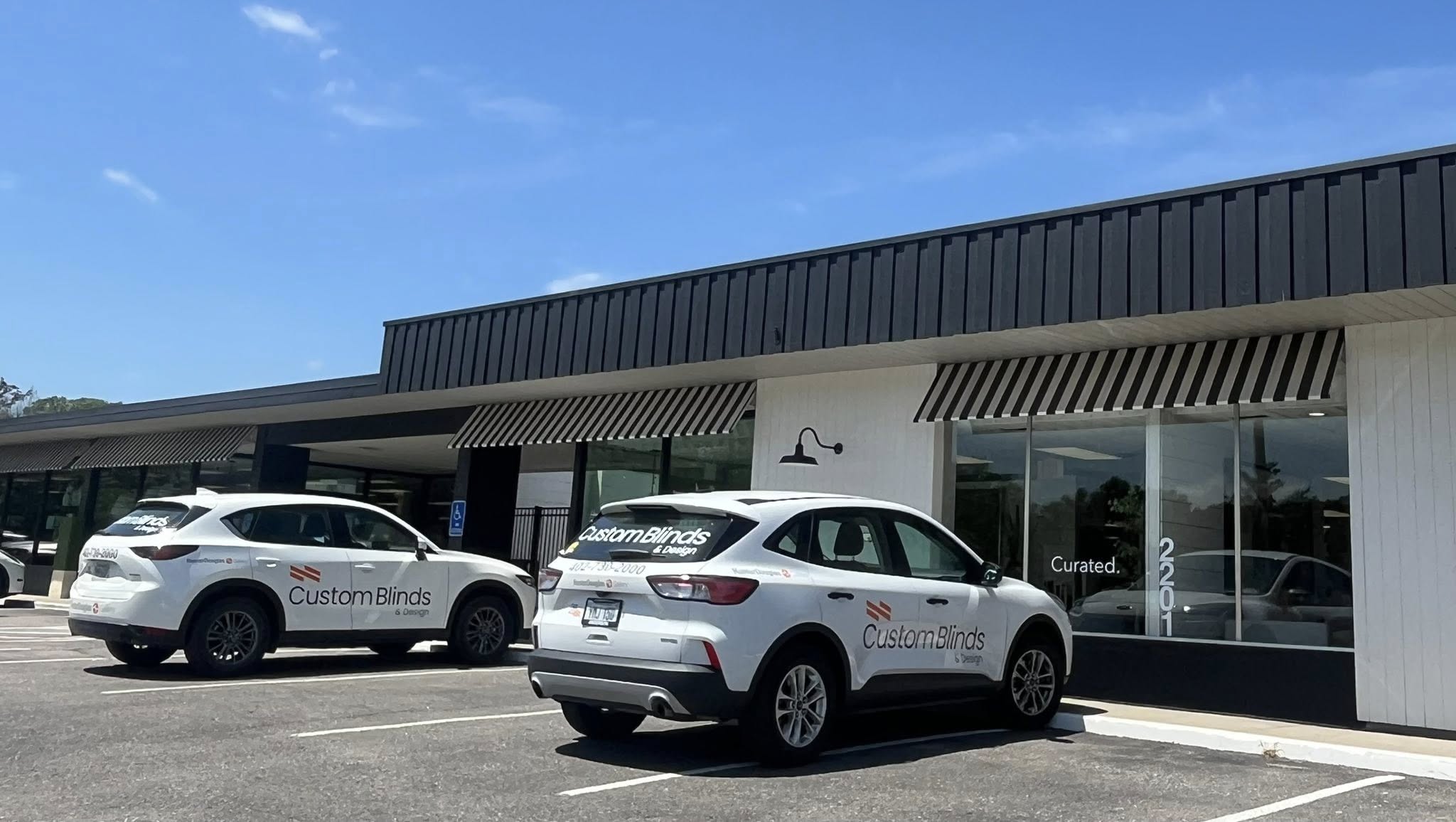
A Window Coverings Business With a Scheduling Problem
Custom Blinds & Design is a multi-metro window coverings company operating across three metro areas. They sell and install custom blinds, shades, shutters, and motorized window treatments from premium manufacturers like Hunter Douglas and Somfy. Their installers drive routes across sprawling service territories, visiting homes for consultations, measurements, and installations.
It's a business that looks straightforward from the outside. A customer wants blinds. You send someone to measure. You order the product. You send someone to install. Simple.
Except nothing about the scheduling was simple. Every appointment required navigating a web of constraints that would make an air traffic controller uncomfortable: installer availability, manufacturer certifications, geographic coverage, drive time between appointments, product-specific tooling requirements, and customer schedule preferences. And all of that was managed by one person—their dispatcher—using a combination of spreadsheets, sticky notes, and institutional knowledge that lived entirely in her head.
Five to Ten Minutes Per Appointment
Quinn Small, the owner of Custom Blinds & Design, tracked the scheduling process and found that each appointment took between 5 and 10 minutes to book. Not to complete—just to schedule.
Here's what that process looked like in practice:
A customer calls in or submits a form requesting a consultation. The dispatcher pulls up the request and starts working through the constraint puzzle. First, she checks which installers cover the customer's metro area. Not all installers serve all three metros, and some only work in specific zones within a metro.
Next, she checks certifications. If the customer is interested in Hunter Douglas products, the installer needs to be Hunter Douglas certified. If they want Somfy motorized shades, the installer needs Somfy certification and the specific diagnostic tools that come with it. Not every installer has every certification, and the certifications matter—manufacturers require certified installers for warranty coverage.
Then she looks at the installer's existing schedule for the requested day. Is there an opening? Is the opening long enough for the type of appointment? A measurement consultation runs about 90 minutes. A full installation can take three to four hours. The time blocks are different, and they need to be right.
Now the hard part: drive time. The dispatcher opens a mapping tool and checks how far the customer's home is from the installer's previous appointment that day. If the installer has a 10:00 AM appointment in the east suburbs that will end around 11:30 AM, and the new customer is in the west suburbs, is there enough time to drive across town and arrive by 1:00 PM? What about traffic patterns at that time of day?
If the math doesn't work for that installer on that day, the dispatcher starts over with a different installer or a different day. Often, she'd go through three or four iterations before finding a combination that worked.
Finally, she'd call the customer back to confirm the time. If the customer couldn't do that time, the whole process started again.
Five to ten minutes per appointment, dozens of appointments per week, week after week. And every single one required the dispatcher's full attention and expertise.
The Phone Tag Problem
The scheduling complexity created a secondary problem that was almost worse than the scheduling itself: phone tag.
Because the dispatcher couldn't confirm an appointment in real time—she needed to check all those constraints first—the standard process was to take the customer's information and call them back. “Let me check our availability and I'll give you a call back within the hour.”
Except the customer doesn't always answer the callback. They're at work, they're in a meeting, they're driving. So the dispatcher leaves a voicemail. The customer calls back two hours later, but now the dispatcher is on another call. Another voicemail. By the time they finally connect, the slot that was available that morning has been taken by another appointment.
Quinn estimated that 20-30% of scheduling interactions involved at least one round of phone tag. Some involved three or four rounds before a time was confirmed. Meanwhile, the customer's enthusiasm was cooling with every missed connection. Some customers got frustrated enough to call a competitor who could book them immediately.
The phone tag problem was costing the company leads. Not because the service was bad or the pricing was wrong, but because the scheduling process created enough friction to push people away.
The Dispatcher's Brilliance (and the System's Blindness)
Here's the part that frustrated Quinn most: his dispatcher was exceptional at her job. She had an encyclopedic knowledge of which installers could do what, where they lived, which routes were efficient on which days, and even which installers worked well with which types of customers. She could solve the scheduling puzzle faster than anyone else in the company because she'd been doing it for years.
“The dispatcher was brilliant. She could do the puzzle in her head faster than anyone. But the software didn't understand drive time, it didn't understand certifications, and it couldn't do any of this without her sitting there manually figuring it out for every single appointment.”
The problem wasn't the person. The problem was that all of that intelligence—the geographic knowledge, the certification matching, the drive time calculations—lived only in her head. When she was on vacation, scheduling fell apart. When she was sick, everything slowed down. And as the business grew across three metros, even she couldn't keep up with the volume.
The scheduling software they were using at the time—a general-purpose calendar tool—showed open time slots on a calendar. That was it. It had no concept of where an installer would be coming from. It didn't know that a Hunter Douglas installation requires a Hunter Douglas-certified tech. It couldn't calculate whether there was physically enough time to get from one appointment to the next.
The software was a blank grid. The dispatcher was the intelligence layer. And that wasn't a sustainable model for a growing business.
What Changed
Custom Blinds & Design implemented a smart booking system that codified all of the dispatcher's institutional knowledge into automated rules. The system was configured with:
Installer profiles with certifications. Each installer's profile included their manufacturer certifications (Hunter Douglas, Somfy, Graber, etc.), their service zones, their typical working hours, and their home base location for calculating first-appointment drive time.
Service type definitions with requirements. Each type of appointment—measurement consultation, standard installation, motorized installation, repair visit—was defined with its typical duration, required certifications, and any special equipment needs.
Real-time drive time calculation. When the system evaluated whether an installer could take an appointment, it calculated actual drive time from their previous appointment (or home base for the first appointment of the day) to the customer's address. Not straight-line distance—actual driving time based on road networks and typical traffic patterns.
Automatic matching. When a customer booked online, the system automatically filtered to installers who were certified for the requested service, available during the requested window, within the right service area, and could physically get there from their previous job with adequate buffer time.
The customer saw none of this complexity. They saw a clean booking form that asked what they needed, where they were located, and when they'd like the appointment. The available time slots they were shown had already been validated against every constraint. They picked a time, confirmed, and received an instant confirmation with their installer's name and details.
From Five Minutes to Thirty Seconds
The results were immediate and dramatic. Scheduling time per appointment went from 5-10 minutes of dispatcher effort to under 30 seconds of automated processing. Most appointments were booked entirely by the customer online, with zero dispatcher involvement.
The phone tag problem disappeared almost overnight. Customers could book their own appointments in real time, 24 hours a day, without waiting for a callback. The confirmation was instant. The appointment was real—already validated against every constraint that used to require manual checking.
But the numbers only told part of the story. Here's what changed operationally:
Missed calls stopped being lost leads. Before, a missed call during business hours meant the customer entered the phone tag cycle. After hours, it meant a voicemail that might not get returned until the next day—if the customer didn't call a competitor first. With online booking available 24/7, a customer who called at 8:00 PM could book their own appointment immediately instead of waiting until morning.
Scheduling conflicts dropped to near zero. When the dispatcher was solving the constraint puzzle manually, mistakes happened. An installer would show up for a Somfy motorized installation without the right diagnostic tools because the certification wasn't checked. Two appointments would be booked too close together, creating a domino effect of delays. These errors didn't happen when the system enforced the constraints automatically.
Installer drive time decreased. The old system didn't optimize for geography—it relied on the dispatcher's mental map. The new system naturally clustered appointments by area because it factored drive time into availability. Installers spent more time in homes and less time on highways.
The dispatcher got her time back. Instead of spending the bulk of her day solving scheduling puzzles, she could focus on customer relationships, following up on estimates, coordinating product orders, and handling the exceptions that genuinely needed a human touch. Her role transformed from scheduler to customer experience manager.
What the Installers Thought
The installers noticed the change immediately. Their days started making more geographic sense. Instead of zigzagging across a metro area, their routes were tighter and more logical. They were showing up to Hunter Douglas jobs because they were Hunter Douglas certified, not because it was their “turn” in the rotation.
The preparation was better, too. Because the booking system captured detailed information about what the customer needed—product type, window count, special requirements—the installers knew what they were walking into before they arrived. They could load their vehicle with the right tools and samples. They could review the job scope on their phone during the drive.
One installer described it as “the schedule finally making sense.” Before, he'd look at his day and see a mix of jobs that didn't follow any geographic logic, with drive times that made hitting his afternoon appointments a daily gamble. After, the schedule felt like someone who understood his territory had built it. Which, in a sense, was exactly what had happened—the system had the same geographic awareness the dispatcher had, but it applied it consistently to every appointment.
The Bigger Lesson
The Custom Blinds & Design story isn't really about window coverings. It's about a pattern that plays out across every home service business that sends technicians, installers, or consultants into the field.
The pattern is this: as your business grows, the scheduling complexity grows exponentially. Adding a third metro area doesn't add 50% more complexity—it might triple it, because every new variable interacts with every other variable. More installers, more certifications, more service areas, more constraint combinations.
At some point, even the most talented dispatcher can't keep up. The phone tag increases. The drive time waste increases. The scheduling conflicts increase. And the business hits a ceiling not because of demand or talent, but because the scheduling infrastructure can't support the growth.
The solution isn't to hire more dispatchers. It's to encode the dispatching intelligence into a system that can apply it consistently, at scale, in real time.
From Custom Blinds to Driive
This experience—living with the scheduling problem daily, seeing the impact on customers, installers, and the dispatcher—is what directly led Quinn to found Driive. The insight was clear: every home service business that sends people into the field has some version of this problem. The constraints are different (certifications vs. equipment vs. skill level), but the structure is the same. A technician needs to be at a specific place, at a specific time, with specific qualifications, and the scheduling system needs to make all of that work without human heroics.
Driive was built to solve the problem that Quinn watched his dispatcher fight every day: making the right match between customer need, technician capability, geographic reality, and schedule availability—and doing it instantly, automatically, and accurately every single time.
Custom Blinds & Design was the first test case. It went from a business where scheduling was a bottleneck limiting growth to one where scheduling was invisible—something that just worked, in the background, without consuming anyone's day.
That's the same transformation Driive delivers for every field service business that implements it: scheduling that goes from being your biggest operational headache to something you stop thinking about entirely. Not because it doesn't matter, but because it finally just works.